- The Money Trails
- Posts
- Why the AI Electricity Bubble is Starting to Look Like Housing
Why the AI Electricity Bubble is Starting to Look Like Housing
How AI demand, grid economics, and one dangerous template are driving costs you can’t escape


Kartik Vyas & Gen Kimura
April 02, 2026

 |  |  |
What’s in This Week’s Issue…
Good morning. There's a 700-gigawatt problem sitting in America's power grid queue right now. That's enough electricity to power more than the entire United States. But here's the twist: most of those projects will never get built.
Doesn't matter. You're already paying for them.
The AI data center boom just handed utility companies the biggest excuse to build in the history of the American power grid. And what's unfolding right now follows the exact same playbook as housing before 2008: insiders structure deals to walk away early, regulators make it easier instead of harder, and by the time anyone notices, the risk has already been transferred to you.
So this week…
🏆 The Big Play: How ghost applications and shell companies are restructuring your electricity bill
💪 The Power Move: Why understanding the real game matters more than waiting for the bubble to pop
💵 Follow the Money: When will the Iran war come to an end?
-GEN
🏆 The Big Play
The biggest money power story of the week.
The AI Power Grid Bubble: How You Pay for Demand That Doesn’t Exist
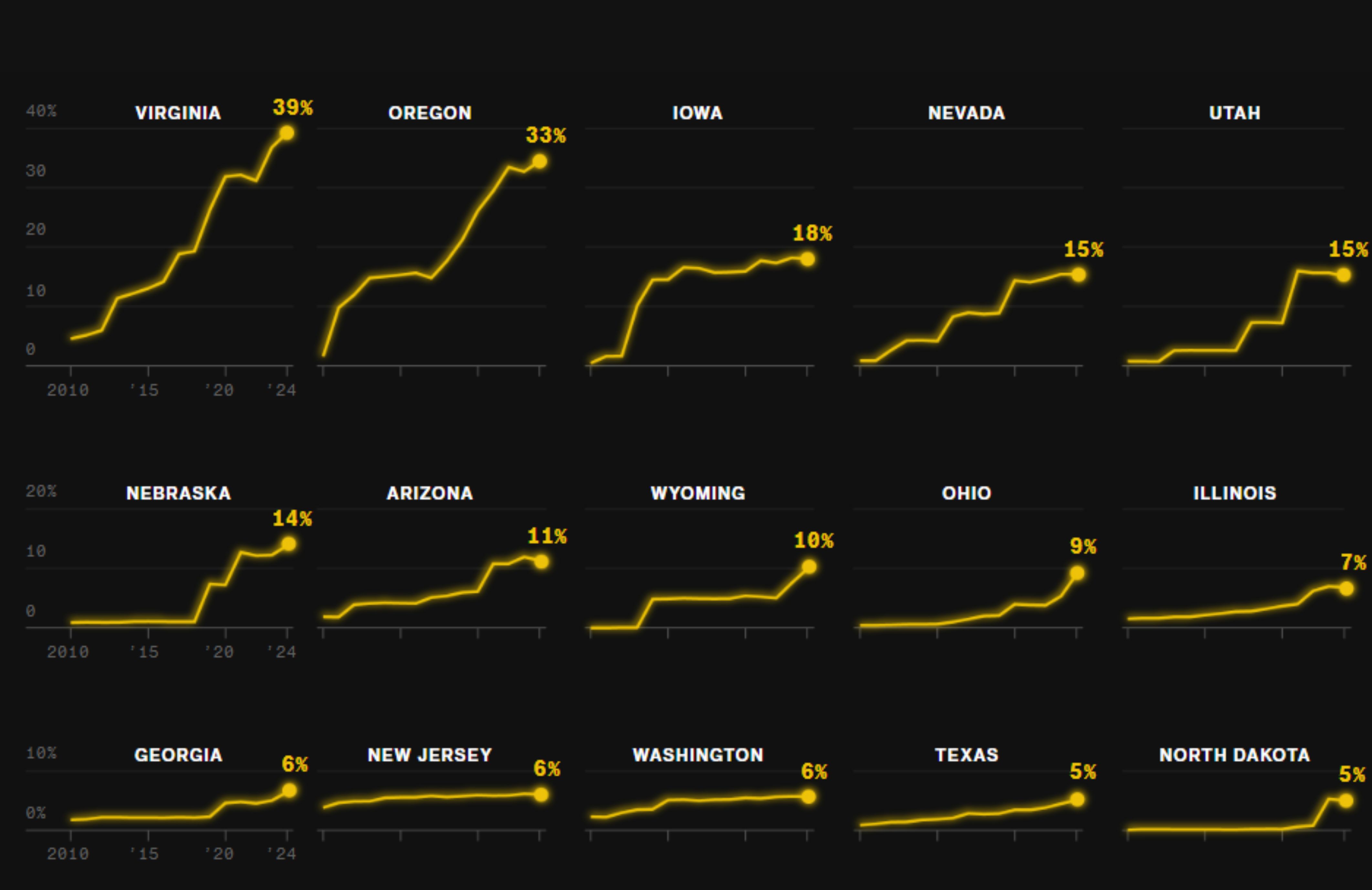
Share of total electricity consumption used by data centers in selected states
Your electricity bill has a reservation fee you've never noticed.
About 10 to 15% of what you pay each month isn't for the power you actually use. It's a capacity charge, like paying to reserve a table at a restaurant, whether you show up or not. The system needs to guarantee enough electricity exists when demand peaks, so you pay for what might get used, not just what gets consumed.
For years, this worked fine. The price stayed stable, and nobody cared. Then AI data centers arrived, and in Virginia's data center corridor, that reservation price exploded from $29 to $333 in just two years.
1. The Ghost Queue Problem
When Meta or Microsoft wants to build a data center, they don't pick one location. They apply for grid connections across multiple states simultaneously:
Utilities nationwide have received connection requests totaling 700 gigawatts of demand.
The entire United States currently uses 477 gigawatts total.
These applications sit in queues, inflating forecasts, even when developers never commit.
These ghost applications inflate the forecast, which inflates the auction price.
Ohio proved this when regulators told developers to pay 85% upfront or face exit fees. More than half the requests disappeared overnight.
Everyone knows the numbers are inflated. Power companies know. Regulators know. But you're still paying based on these phantom data centers.
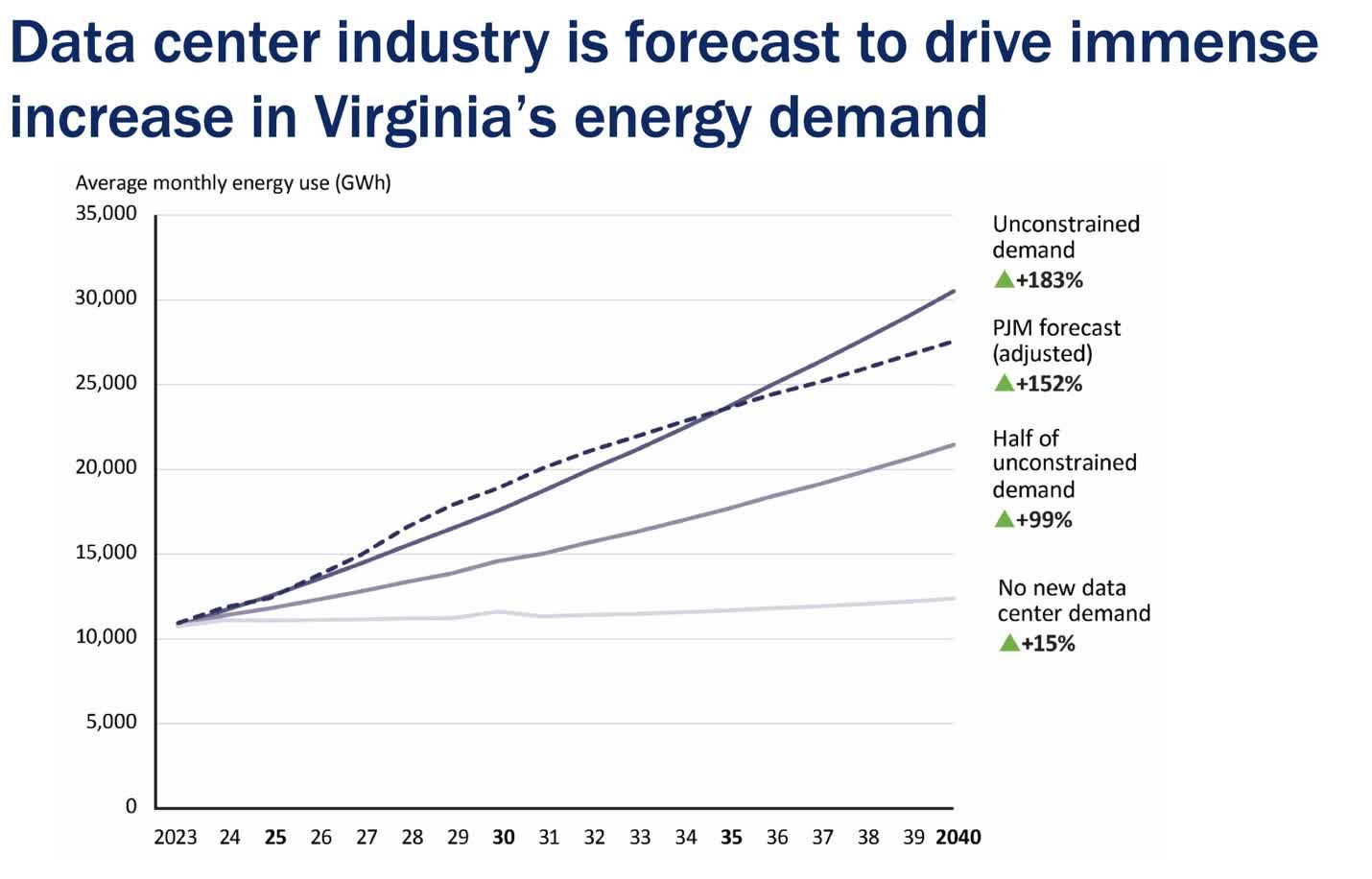
2. The Build-and-Charge Pipeline
Your utility company doesn't make money by selling you electricity. They make money by building things.
Utilities can charge you for the cost of construction plus a guaranteed profit on top.
The more they build, the more they can charge, regardless of whether communities actually need it.
AI data centers just gave them the biggest excuse in grid history
Dominion Energy in Virginia told regulators they need $7.6 billion for new transmission lines. When asked who would pay, one of Dominion's own witnesses revealed that regular customers would cover more than half, including transmission lines that only serve data centers.
Virginia regulators pushed back, stripped $350 million in charges, and forced Dominion to create a separate rate class for data centers with 14-year contracts.
Sounds like a win. But analysis shows ratepayers will still cover 61% of upgrade costs once those contracts expire. That’s how the long-term risk lands on you.
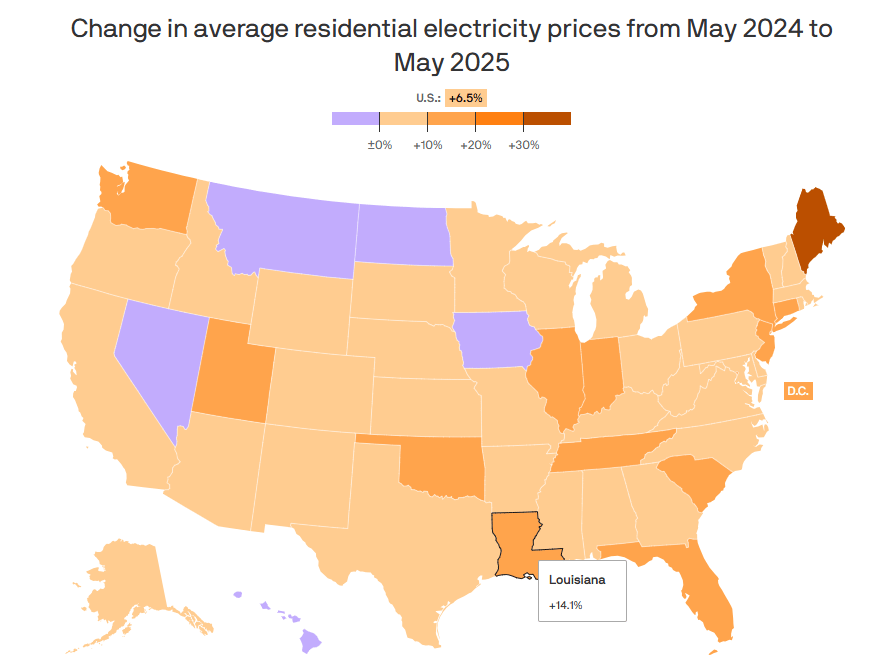
3. The Template Deal
In Holly Ridge, Louisiana, a town of 2,000, Meta is building the largest AI data center in the world:
It will need three times what the entire city of New Orleans uses in power every year.
Three new power plants will cost $3.2 billion total.
The utility, Entergy, skipped the bidding process and hired itself.
By awarding itself the contract, Entergy generated $178 million in new shareholder profit. The public got one week's notice on a decision that will shape their electricity bills for decades.
Meta signed a 15-year power agreement. But those power plants last 30 years. If Meta stays the full 15 years, there's still another 15 years where someone has to pay for power plants built entirely for a company that's already gone.
But Meta didn't actually sign the deal as Meta. They created a shell company called Ley LLC. On the same day regulators approved the gas plant, Meta quietly registered another company in Delaware called Bayonet Investor LLC. Two months later, Meta sold 80% of the entire project to private equity firm Blue Owl Capital through Bayonet LLC.
After the Meta deal, Louisiana passed a "Lightning Amendment", making this structure a template. Entergy already has new data center proposals across four states. If approved, they'd add the electricity demand of 10 New Orleans cities to the grid.
The U.S. power grid can barely handle what's already here. PJM's last auction fell short of its own reliability targets. If nothing changes, parts of the country could fall below safety standards by June 2027.
💪 The Power Moves
Playbook for understanding the game of power.
Why the Real Game Has Nothing to Do with Supply and Demand
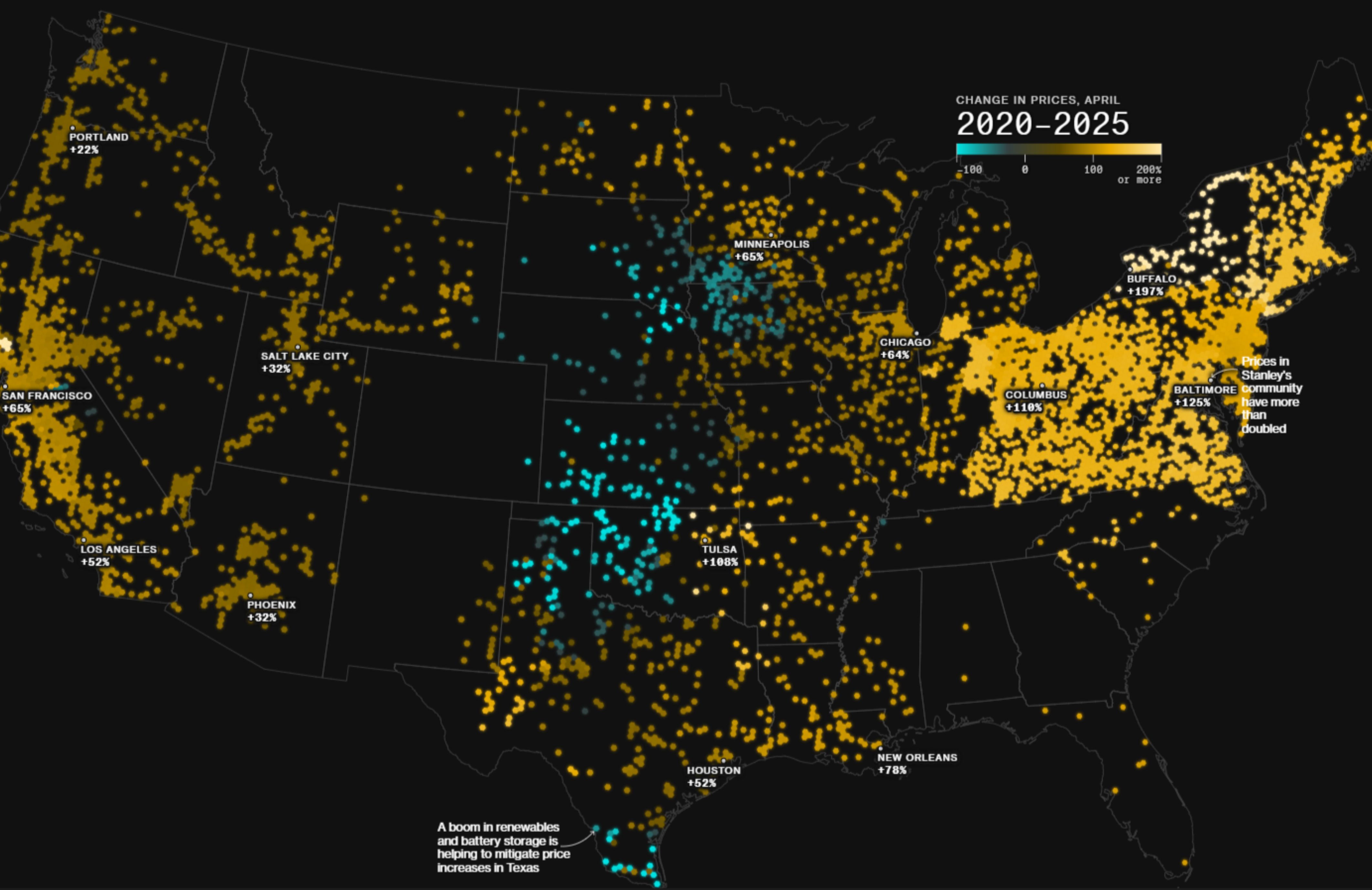
Electricity Price Increase between 2020 and 2025
People keep saying the solution is for the AI bubble to pop. Because they think if demand collapses, prices come down. Simple supply and demand.
But that's not how this works. You can't unbuild a gas plant, you can't uninstall transmission lines. And you definitely can't get your money back once it's been baked into rate structures for the next 30 years.
The real lesson isn't about AI or electricity. It's about how systems actually work when insiders can structure deals to walk away in four years, when utilities profit from every dollar spent regardless of need, and when lobbyists gut regulations before they're written.
The Takeaway:
Supply and demand graphs explain markets for the permanent underclass. The real game happens in auction mechanisms you've never heard of, utility profit structures you've never questioned, and shell company deals you'll never see.
4 million households lost power last year. 21 million are behind on payments.
So understanding the actual systems matters more than debating whether AI is overhyped, because the costs are already baked into your bill, and the infrastructure being built today determines what you'll pay for the next three decades.
💵 Following the Money
Three of the wildest financial and corruption stories from around the world.

President Trump delivering his April 1 Prime-time address on Iran crisis
✨ Poll time!
Do you think it’s fair to pay today for AI-driven electricity demand that may never happen? |


