- The Money Trails
- Posts
- How This New Industry is Breaking America
How This New Industry is Breaking America
Inside a $2 trillion shadow banking empire controls American economy


Kartik Vyas & Gen Kimura
November 27, 2025

 |  |  |
What’s in This Week’s Issue…
Good morning. Remember when getting a loan meant walking into a bank, sitting across from a loan officer, and hoping your credit score was good enough?
Those days are over.
Today, there's a $2 trillion shadow banking empire that operates without the regulations banks face, without the oversight you'd expect, and increasingly without any competition.
They're called private credit firms, and they've quietly become more powerful than the banks they replaced.
So this week…
🏆 The Big Play: How private credit became a $2 trillion empire
💪 The Power Move: How you can win against this shadow system
💵 Follow the Money: How a Canadian Olympic snowboarder became a drug kingpin
-GEN
🏆 The Big Play
The biggest money power story of the week.
Private Credit: How Private Equity Created a New $2T Empire

Biggest private equity firms are also the biggest private credit firms
After 2008, banks faced stricter regulations and pulled back from risky loans. Private equity firms, which traditionally borrowed from these banks to buy companies, suddenly had a problem.
Where would they get the cash for their leveraged buyouts?
Enter private credit. These firms stepped into the gap with a simple promise: faster deals, less paperwork, and higher returns for investors.
But what started as a solution to fill a market hole has evolved into something far more concerning:
1. The New Loan Sharks
Private credit firms don't face the same regulations that banks do because they operate in private markets.
This gives them massive advantages that traditional lenders can't match:
Deals get done in weeks instead of months, with minimal regulatory paperwork
They can structure loans in ways banks legally cannot
They charge higher interest rates because borrowers have fewer alternatives
But here's where it gets interesting.
The companies turning to private credit aren't just small businesses that banks won't touch. They're increasingly large corporations that private equity firms are buying out.
And many of those private equity firms? They're also the private credit firms, and that’s where it gets more dangerous.
2. When You Control Both Sides of the Deal
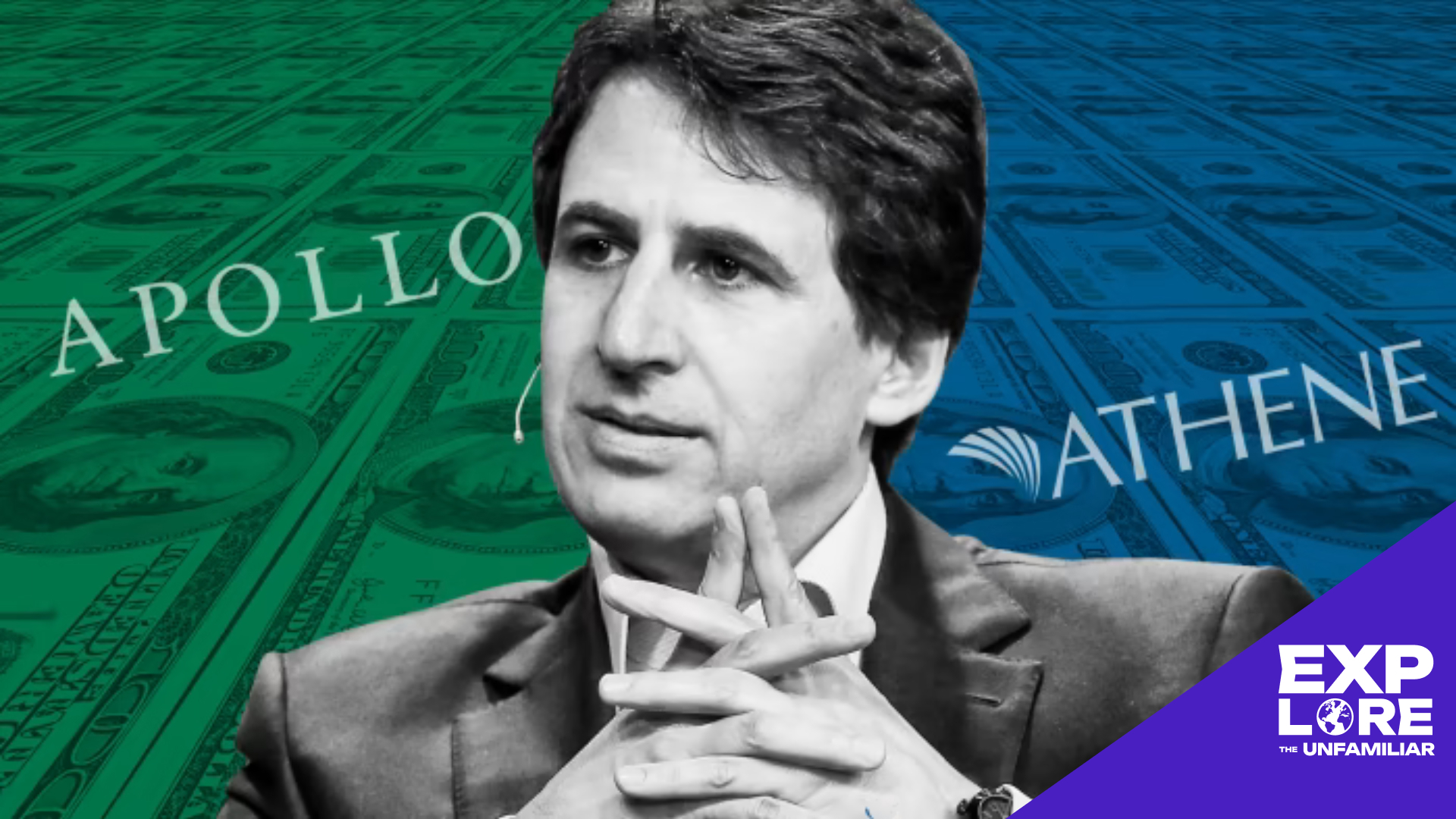
The biggest private equity firms now control about one-third of all private credit assets. Blackstone, Apollo, and KKR aren't just buying companies anymore.
They're also lending the money to finance those purchases:
Blackstone arranges loans from its credit funds to finance buyouts from its equity funds
In 2023, Apollo joined with Blackstone to finance Carlyle's $5.5 billion healthcare buyout
On paper, these are separate entities with different investors
The same parent company sits on both sides of the negotiating table. When you owe money to yourself, the rules change.
Companies can delay interest payments by simply saying they'll pay next year. Or they use "payment in kind" interest, where unpaid interest gets added to the existing loan, creating a snowball effect of compounding debt.
This is all perfectly legal. The lines between owner and lender have blurred to the point of invisibility.

PE firms make better returns on private credit deals
3. The Zombie Company Economy
When private equity takes over a company using private credit financing, something strange happens.
Instead of companies going bankrupt after overleveraging, we're seeing more "zombie companies."
These businesses are so loaded with debt that they can't grow, innovate, or sometimes even pay their interest bills:
Toys R Us was paying $400 million annually just in interest before its collapse
More than 3 million workers lost jobs in the retail sector in the last decade after private equity takeovers
Private equity-owned hospitals routinely raise prices while service quality stagnates
But private credit firms don't want these companies to die. Dead companies can't pay management fees.
So they keep the zombies alive through financial engineering, creating an economy of walking dead businesses that can't compete but won't disappear.
The infection spreads.
When a recession hits, this fragile network of zombie companies could snap at once, unleashing a wave of defaults that ripples through the entire economy.
💪 The Power Moves
Playbook for understanding the game of power.
How To Win Against This Shadow System

Gold vs S&P500
You're funding this entire system without knowing it. The money fueling private credit comes from pension funds, insurance companies, and university endowments, not billionaires.
So when your retirement money is financing the very deals that might eliminate your job or raise your healthcare costs, the biggest move you can make is by owning something real.
That’s why investors across the world are quietly returning to one asset that still stands outside the system, gold.
You already know the reasons to own it: it’s real money, it’s lasting wealth, and it can’t be inflated away.
But here’s the thing: most people just let their gold sit there, doing nothing.
That’s where Monetary Metals is changing the game.
Instead of paying to store your gold or watching it collect dust, you can now earn a yield on it, paid in physical gold.
With their gold leasing marketplace, investors earn up to 4% per year in gold. This means your stack grows in real gold, while gold prices may even rise on top of that.
Join thousands of investors earning real yield in physical gold and silver every month with Monetary Metals.
So don’t just hold gold, make it work for you.
Earn up to 4% in gold, paid in gold, with Monetary Metals. Go to Monetary-Metals.com/GEN to learn more and start putting your gold to work.
The Takeaway:
Private credit has become too big to fail but too private to regulate. Just like 2008, you won't know the real risks until it's too late.
The question isn't whether this system will face a reckoning, but whether you'll be prepared when it does.
💵 Following the Money
Three of the wildest financial and corruption stories from around the world.

FBI’s $15M reward for Canadian snowboarder Ryan Wedding
✨ Poll time!
Do you think private credit should be severely restricted by regulators? |