- The Money Trails
- Posts
- How Gambling Predicts America's Collapse
How Gambling Predicts America's Collapse
Inside the rise of the casino mindset eating America from the inside out


Kartik Vyas & Gen Kimura
November 13, 2025

 |  |  |
What’s in This Week’s Issue…
Good morning. A French trader made $85 million betting on Trump's election victory last year. Not because he had better insights than pollsters, but because he bet $28 million to shift the odds in his favor.
This wasn't just gambling. This was market manipulation disguising itself as prediction, where a single whale's bet moved public perception and possibly influenced how millions of Americans voted.
So this week…
🏆 The Big Play: How prediction markets turned reality into a rigged casino
💪 The Power Move: How you can survive when everything’s already a bet
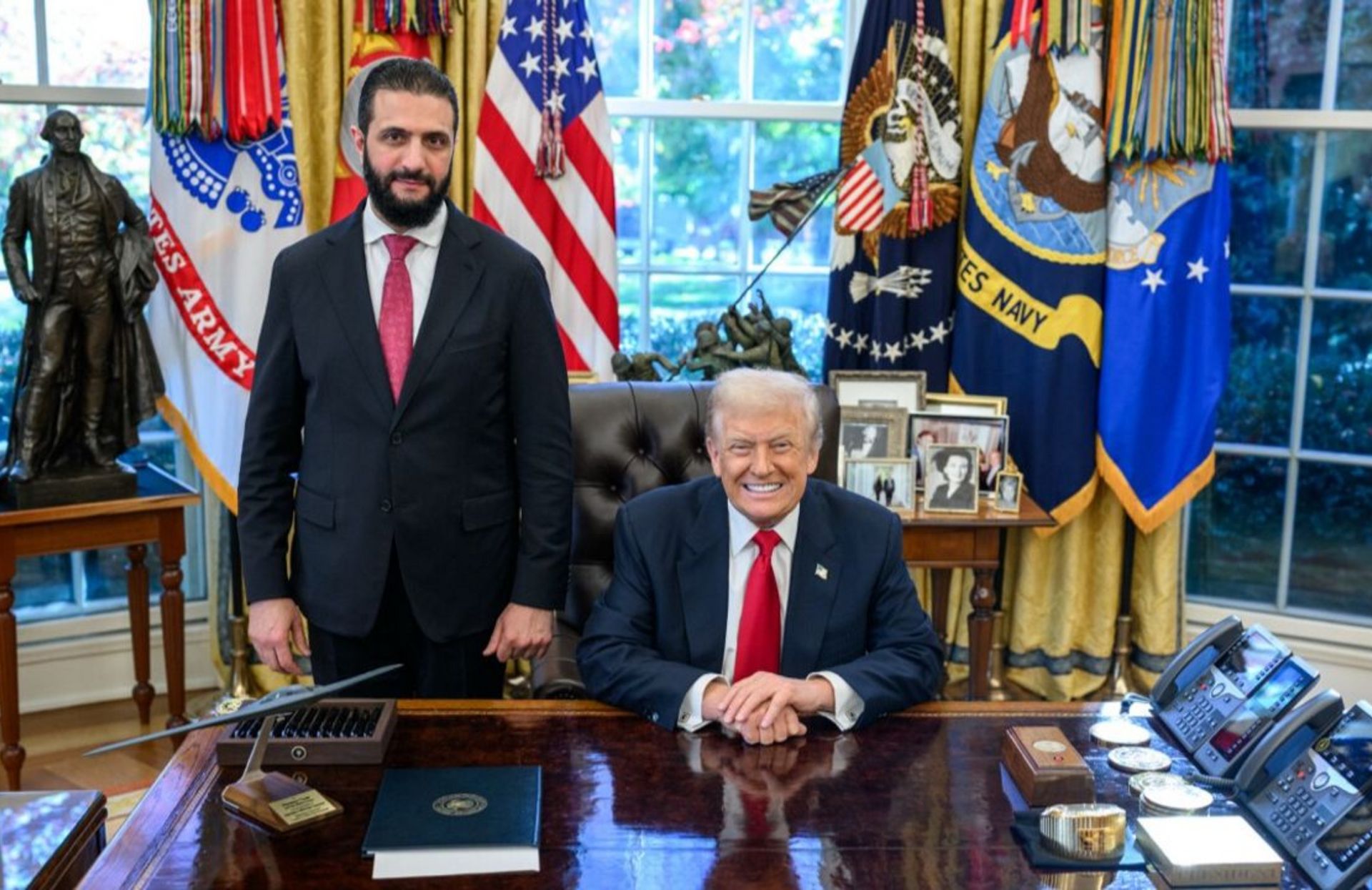
💵 Follow the Money: How Syria’s al-Sharaa went from a $10M bounty to a White House deal
-GEN
🏆 The Big Play
The biggest money power story of the week.
The New Casino: How Prediction Markets Hijacked Reality

Trading on Prediction Markets Peaks in Election Seasons
During the 2008 financial crisis, 17 states saw record lottery sales. Because when people feel desperate, they buy hope.
And today, with economic uncertainty everywhere, Americans are gambling at unprecedented levels. Commercial gambling just hit $72 billion in revenue.
But now the betting menu has expanded beyond sports and casinos to literally everything: elections, wars, celebrity divorces, even whether specific politicians will be assassinated.
So, where exactly does this stop?
1. The New Gambling Gold Rush
Two companies just cracked the code on turning reality into a betting market:
Kalshi won a landmark regulatory battle allowing Americans to legally bet on elections through Wall Street-style contracts.
Polymarket emerged from crypto as a decentralized platform where you can wager on any global event.
Both platforms processed billions in wagers. Polymarket alone saw over $3.7 billion in election bets, more than twice what Americans wagered on the Super Bowl.
These aren't just betting platforms, they're data harvesting operations.
Polymarket charges no fees because they're collecting something more valuable: real-time intelligence on what people with money actually believe will happen.
And platforms like Bloomberg already integrated Polymarket's odds into their terminals. So now, hedge funds, news outlets, and foreign governments are paying premium prices for this "money where your mouth is" data.
2. When Whales Manipulate Democracy
Prediction markets were built on one promise: that the collective wisdom of the crowd would beat any expert.
But here's where prediction markets stop being games and start becoming weapons:
One trader, "Theo," poured $28 million into pro-Trump bets on Polymarket, single-handedly shifting Trump's odds to well over 60% at peak.
These odds influenced media coverage and voter behavior through bandwagon effects and demobilization.
When Trump won, Theo walked away with $85 million, but researchers found his market manipulation affected prices for 60 days.
The terrifying part isn't that someone made money betting on Trump. It's that prediction markets aren't democratic.
Your vote counts the same as everyone else's, but your bet only matters if you have millions to wager.
This means wealthy whales can literally buy public perception and potentially swing outcomes through sheer betting power.
3. The Insider Trading Paradise
We're now living in a world where insider trading laws don't apply to reality itself:
One in five congressmen trade stocks directly related to their committee work, with Nancy Pelosi's portfolio outperforming Warren Buffett.
While Kalshi prohibits insider trading, Polymarket does not have an explicit rule against it.
Pentagon tried this in 2003 with a "Policy Analysis Market" for betting on Middle East conflicts and terrorist attacks before scrapping it due to public outrage.
But the Pentagon's nightmare scenario is now reality.
If you can profit from predicting a tragedy, why wouldn’t someone try to cause one?
The same incentive structure that led gamblers to bribe NBA players to fix games now scales up to elections and wars.
And when everyone, from politicians to traders, realizes that elections, wars, and economic policy can be priced, the game stops being about odds. It becomes about ownership.
💪 The Power Moves
Playbook for understanding the game of power.
How You Can Survive When Everything Becomes a Bet

How the world turns to gold in uncertain times
When markets start treating the future like a slot machine, the smartest play isn’t to double down, it’s to step outside the casino.
Because in a world addicted to speculation, the most radical move isn’t to predict what happens next. It’s to own something real.
That’s why investors across the world are quietly returning to one asset that still stands outside the system, gold.
You already know the reasons to own it: it’s real money, it’s lasting wealth, and it can’t be inflated away.
But here’s the thing: most people just let their gold sit there, doing nothing.
That’s where Monetary Metals is changing the game.
Instead of paying to store your gold or watching it collect dust, you can now earn a yield on it, paid in physical gold.
With their gold leasing marketplace, investors earn up to 4% per year in gold. This means your stack grows in real gold, while gold prices may even rise on top of that.
Join thousands of investors earning real yield in physical gold and silver every month with Monetary Metals.
So don’t just hold gold, make it work for you.
Earn up to 4% in gold, paid in gold, with Monetary Metals. Go to Monetary-Metals.com/GEN to learn more and start putting your gold to work.
The Takeaway:
When speculation infects everything, from elections to economies, the power isn’t in playing the game.
It’s in owning what the game can’t manipulate.
💵 Following the Money
Three of the wildest financial and corruption stories from around the world.
✨ Poll time!
Do you think betting on politics should be legal? |