- The Money Trails
- Posts
- How America Destroyed Its Own Birth Rate
How America Destroyed Its Own Birth Rate
How delayed parenthood became a multi-million dollar profit machine designed to make you wait


Kartik Vyas & Gen Kimura
April 09, 2026

 |  |  |
What’s in This Week’s Issue…
Good morning. The average American couple will spend $127,000 in the first year of having a child. That's not a typo. One hundred and twenty-seven thousand dollars.
But here's what nobody's talking about: where that money actually goes.
It's not just hospitals and daycare anymore. It's the fertility clinics that depend on you waiting too long. It's employers who'd rather pay $20,000 to freeze your eggs than give you maternity leave. And formula lobbies actively fighting against policies that would let mothers breastfeed.
The business model is simple: the longer you wait, the more you pay. And the system is designed to make you wait.
So this week…
🏆 The Big Play: How delayed parenthood became a multi-billion dollar industry
💪 The Power Move: What this population crisis is already costing you
💵 Follow the Money: Is America falling out of love with cocaine?
-GEN
🏆 The Big Play
The biggest money power story of the week.
How America Killed Its Own Birth Rate
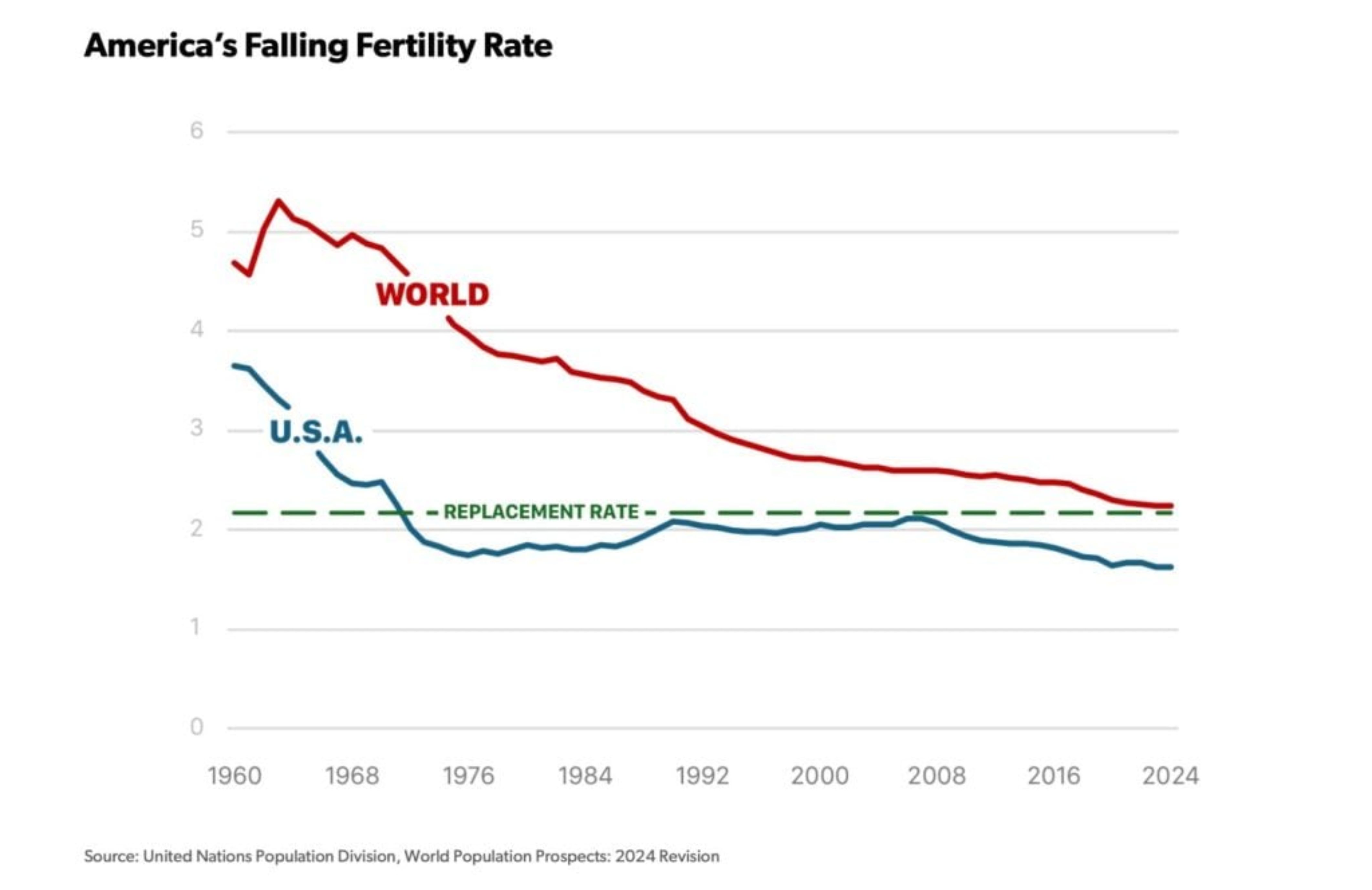
America’s declining fertility rate
Birth rates just hit 1.6 kids per woman, the lowest in American history.
But here's the twist: people still want kids. Surveys show Americans want 2 to 3 children.
The problem isn't desire. It's that an entire industry has built itself around the gap between wanting kids and being able to afford them.
1. How Your Employer Turned Parenthood Into a Product
You're 28. You've been with your partner for three years. You both want kids eventually, but the math doesn't work yet. Rent eats half your paycheck, and student loans take another chunk. So you wait.
Then your employer offers a perk: $20,000 toward egg freezing. It sounds generous. Progressive, even. Your friend did it and swears by it. So you take the deal.
Apple and Facebook pioneered this in 2014, framing it as empowering women's reproductive choices
Now, 40% of US employers offer fertility benefits, and 72% of employees say it makes them stay longer at their jobs
But here's the math companies won't tell you: paying $20,000 to freeze your eggs is infinitely cheaper than providing paid maternity leave, childcare support, or flexible schedules
You thought you were making a choice. But you just became a customer in a system that profits from delay.
The company keeps you at your desk, the fertility clinic gets your business now and later, and you've just pushed parenthood back by years, right into the most expensive biological window of your life.
2. The $50,000 Conception Industry
Fast forward a few years. You're ready, so you unfreeze those eggs.
Welcome to the real bill.
One IVF cycle costs $25,000. Most people don't get pregnant on the first try. The average patient spends $50,000 across multiple cycles. Only 25% of Americans have insurance that covers any of this.
But wait, there's more:
Companies like Nucleus Genomics now offer embryo screening for $30,000, scanning over 2,000 traits from intelligence to eye color to mental health disorders.
Couples who could conceive naturally are choosing IVF specifically to access this screening, turning conception into a design process.
This isn't fringe anymore: the fertility startup sector raised triple the VC funding in recent years compared to two years prior, making it one of the fastest-growing areas in healthcare.
When Progeny, a fertility benefits management company, filed to go public, they told investors something revealing.
They called delayed parenthood a "demographic tailwind" and a worsening economy "potential net demand drivers”, which simply means the worse things get, the more their business grows.
3. The Delivery Room Profit Machine
You're pregnant. Congratulations. Now comes the $15,000 vaginal delivery bill or the $30,000 C-section.
One in three US births today are C-sections, even though the World Health Organization says the ideal rate should be 10 to 15%. Why the gap?
C-sections generate nearly double the revenue of vaginal births and take 45 minutes instead of hours or days.
A national study found hospitals with higher C-section profit margins were five times more likely to perform them, regardless of the mother's actual risk level.
The US has the worst maternal mortality rate of any developed nation, and over 80% of those deaths were preventable.
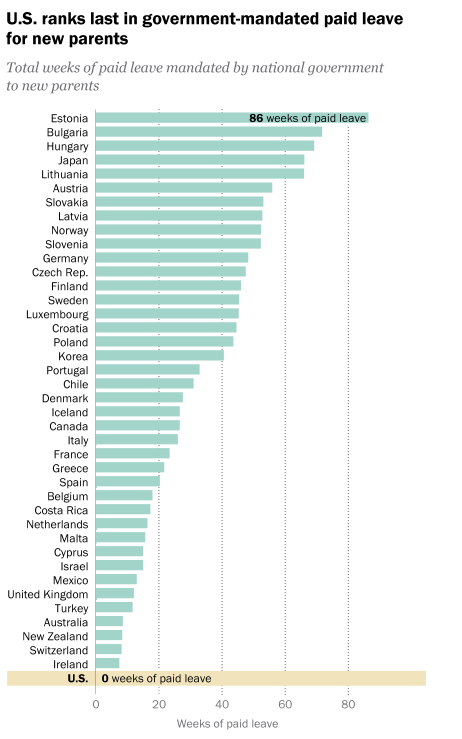
Your baby is here. Beautiful. Now your partner better get back to work, because the US is the only developed nation with zero guaranteed paid maternity leave. Every comparable country offers at least 14 weeks. Why don't we?
The formula milk industry has spent millions lobbying against paid leave. Their logic is ruthless and simple: paid leave makes breastfeeding possible, and breastfeeding cuts into their $55 billion global business.
Child care starts: $18,000 per year. But that's just what shows on the bill. Columbia University found that working women see their incomes cut in half after having children. Meanwhile, fathers earn 25% more than men without kids. Employers assume moms will leave early, miss work, and pass on promotions. They price that in.
The gender pay gap can be debated. The parenthood penalty cannot.
💪 The Power Moves
Playbook for understanding the game of power.
What This Population Crisis is Already Costing You
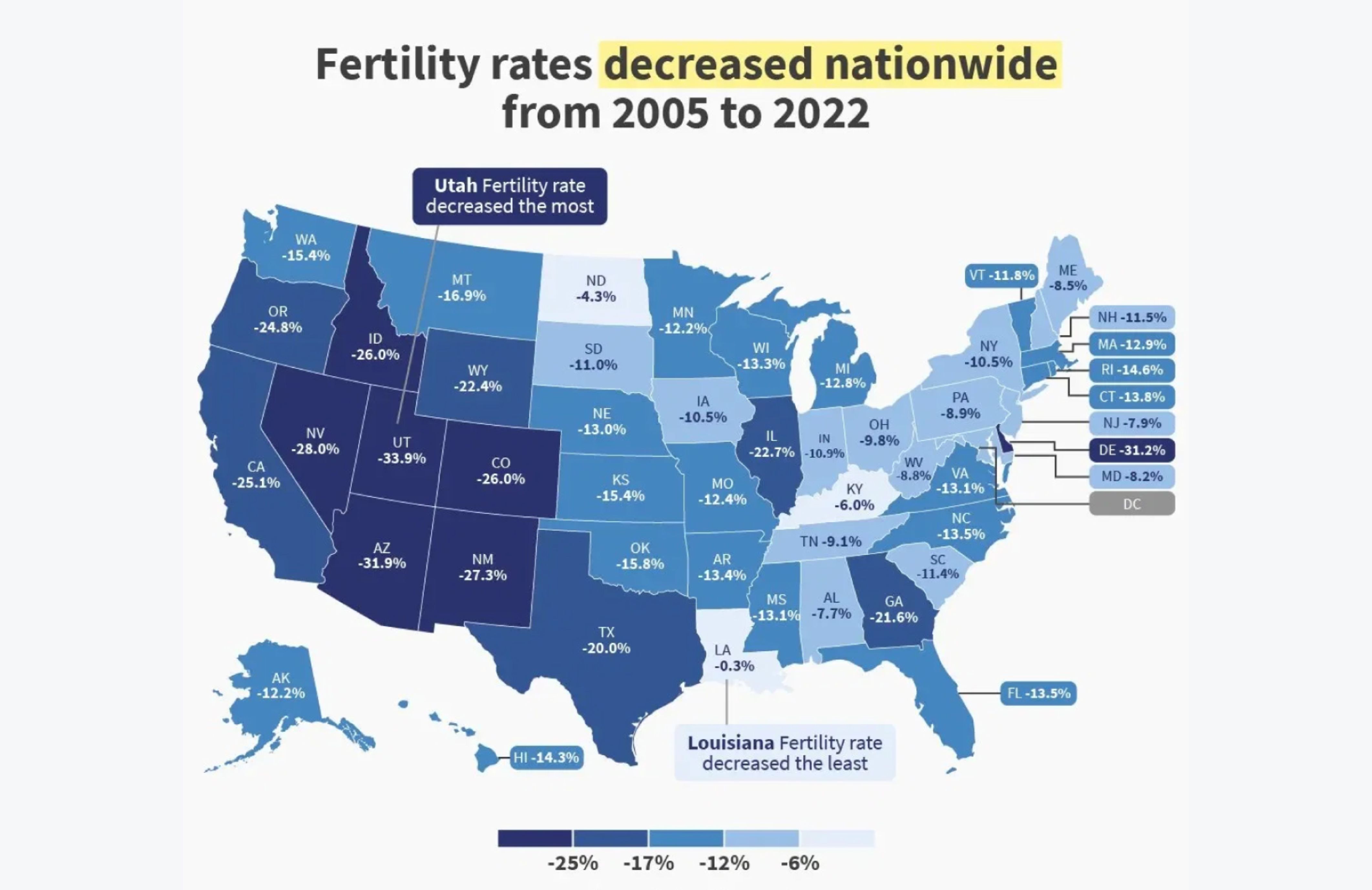
State-wise fertility rates change from 2005 to 2022
You might think this doesn't affect you. Maybe you already had kids. Maybe you never want them. Maybe you're part of the 85% of my audience that's male and figures this is someone else's problem.
But here's what declining birth rates actually cost everyone:
The infrastructure collapse that you're not seeing
The retirement crisis that is already here
The foundational fix (jobs, housing, and wages) that nobody wants to focus on
The Takeaway:
If politicians wanted to fix declining birth rates, they could.
They find money for wars instantly. But birth rates, housing, immigration? Those stay broken because the money and power behind them profit from the status quo.
So if you want kids, don't let a system designed to extract $127,000 from that decision make it for you.
💵 Following the Money
Three of the wildest financial and corruption stories from around the world.
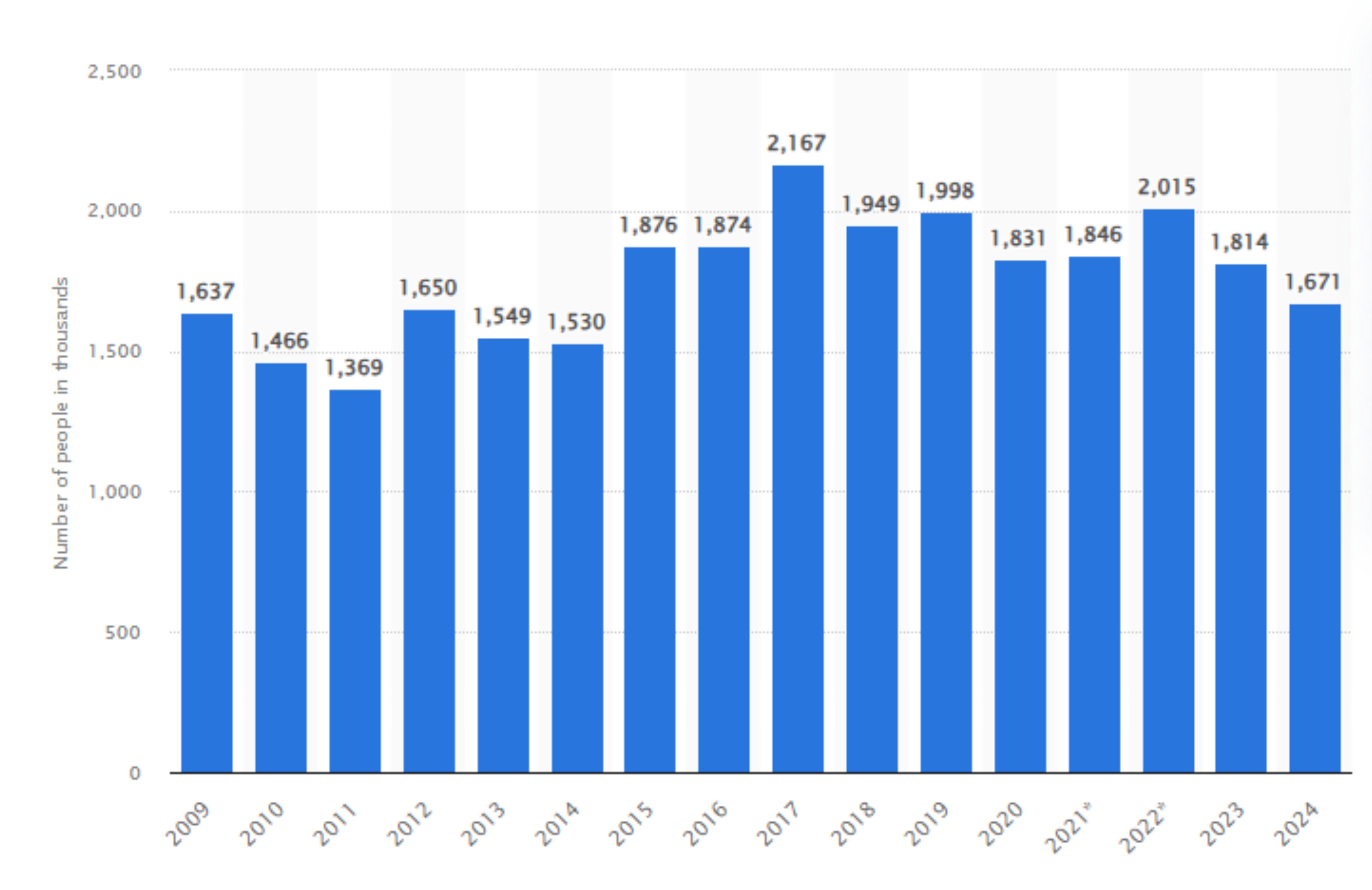
Number of people in the U.S. who used cocaine in the past month from 2009 to 2024 (in 1000)
✨ Poll time!
Can we fix the decreasing birth rates problem in the United States? |